
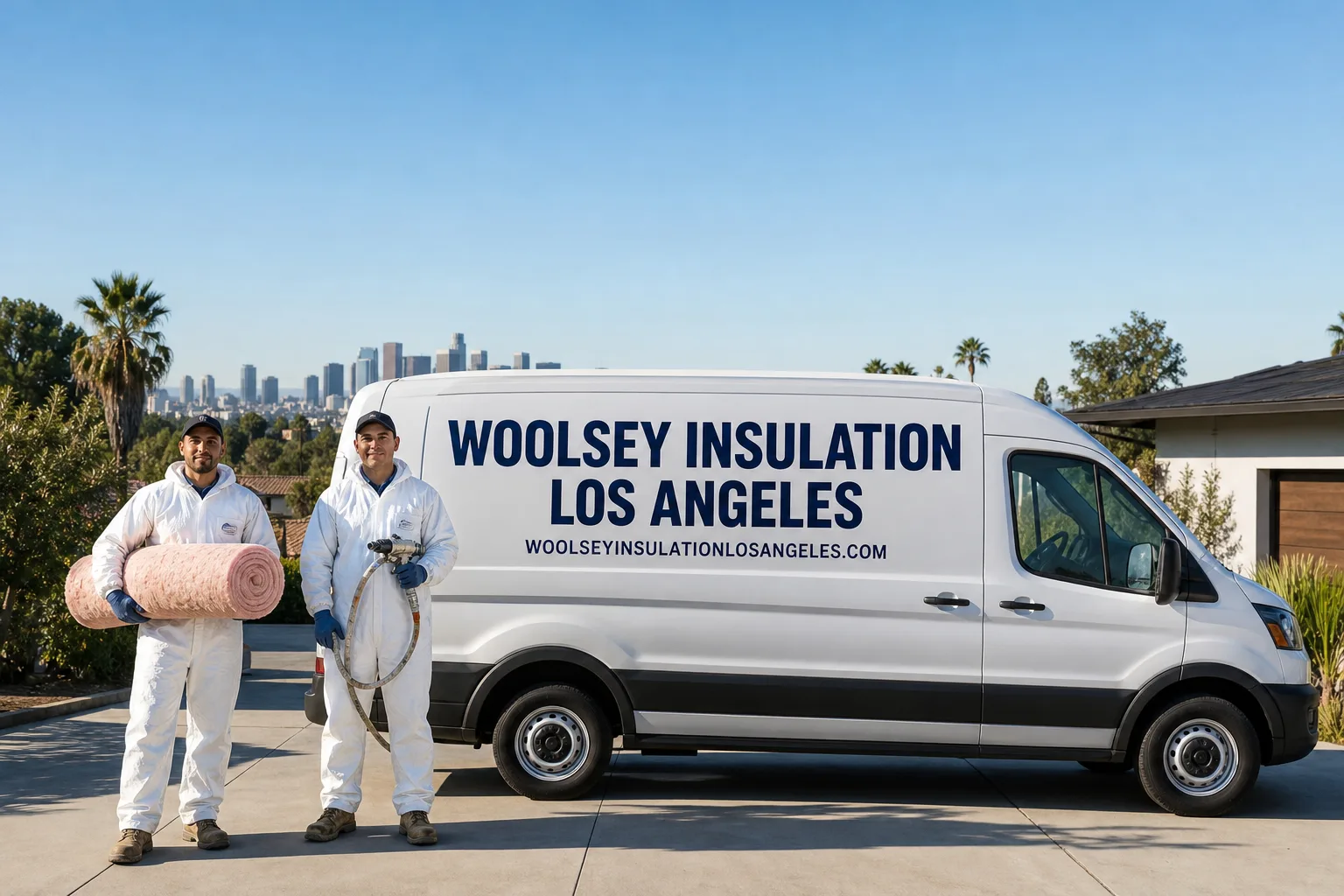
Fast, Reliable Spray Foam Insulation Across Hancock Park
Most spray foam insulation jobs in Hancock Park run between $2,200 and $7,800 depending on the area treated, and we give you the exact written number before any work starts. That’s the Kingswell Way, and it’s how we’ve operated since 2002. If you live in one of the grand Mediterranean or Tudor Revival homes along South June Street, McCadden Place, or Hudson Avenue, you already know your house fights the August heat differently than a newer build in Mid-Wilshire. Call (213) 232-7269 and you’ll reach a live person, day or night, who can schedule a real arrival window and a free estimate for your Hancock Park home.
Why Woolsey Insulation Los Angeles Is Hancock Park’s Preferred Spray Foam Insulation Company
Hancock Park isn’t a production-home neighborhood. The houses were built between roughly 1920 and 1940, most with lath-and-plaster walls, stucco exteriors, and clay tile roofs. Spray foam behaves differently in those cavities than it does in modern drywall construction, and our crews know the difference because they’ve worked these streets. We understand that spraying foam behind original plaster requires restraint: too much expansion pressure and you crack a 95-year-old ceiling. Too little and the seal isn’t complete. That balance comes from experience, not a spec sheet.
Every crew that arrives at a Hancock Park address is background-checked and uniformed. You’ll know who’s walking into your home before the door opens. The job runs on a committed arrival window, a written price delivered before work begins, and a clean job site when we leave. If something isn’t right within 365 days, we come back and fix it at no charge. That’s in writing, on every job, no exceptions. Glenn Hartley leads our Los Angeles team, and he’s built the operation around a simple standard: say the price, show up in the window, leave it cleaner than you found it, put the guarantee in writing.
Garage Spray Foam Insulation in Hancock Park
Garage Spray Foam Insulation in Hancock Park almost always comes down to one problem: a detached garage from the 1920s or 1930s with an uninsulated roof and walls that turns into an oven by noon in July. Closed-cell spray foam applied to the ceiling and wall cavities can drop interior garage temperatures by 15 to 20 degrees on a hot day, and it costs between $1,800 and $4,200 for a typical one to two car Hancock Park garage. We see this most often where the garage has been converted into a home office, a studio, or a workshop, or where the homeowner simply wants to keep stored belongings from cooking through the summer.
Old Hardware, Tight Clearances
Hancock Park garages weren’t built with insulation in mind. The stud bays are often irregular, the rafters are spaced for 1920s lumber dimensions, and there’s frequently original knob-and-tube wiring running along the ceiling joists. We plan around all of it before spraying. If old electrical is active, we coordinate with your electrician to address it first, then come back and spray cleanly.
Ceiling Versus Full Enclosure
Some homeowners only want the garage ceiling done to keep heat from radiating down. That runs $1,200 to $2,600. A full enclosure, including walls, runs higher but makes the space genuinely usable year round. We’ll give you both numbers in writing so you can decide without pressure.
Closed Cell Spray Foam Insulation in Hancock Park
Closed Cell Spray Foam Insulation in Hancock Park is the most common retrofit we recommend for attics in the area’s 1920s and 1930s homes. Closed-cell foam is a two-part liquid that expands on contact and seals gaps airtight, and it adds structural rigidity that open-cell doesn’t. In an older Hancock Park house, that rigidity matters because it reinforces framing that’s been settling for nearly a century. Typical attic applications run $3,500 to $7,800, and the work is usually completed in one to two days.
Why Closed-Cell Makes Sense Here
Closed-cell foam acts as both an insulator and an air barrier. In an unvented attic retrofit, that means the roofline gets sealed so conditioned air stays put. For a 1929 Spanish Colonial with original plaster ceilings, the difference is measurable: we’ve seen upstairs temperature swings drop from double digits to under five degrees after a proper closed-cell application along the roofline.
When Open-Cell Is the Better Fit
Open-cell spray foam costs less, roughly $2,800 to $5,600 for a full attic, and it’s better for sound dampening on interior walls. But it absorbs moisture, which makes it a poor choice for tight wall cavities in Hancock Park’s older homes where ventilation is already compromised. We’d rather tell you that upfront than sell you the wrong material.
Trusted Brands We Service in Hancock Park
We install and service spray foam from Johns Manville, Demilec, and CertainTeed, among eight leading insulation brands. Having multiple lines isn’t about sales; it’s about matching the material to the house. A 1920s Tudor Revival on McCadden Place with original plaster needs a different expansion profile than a 2000s addition off the back. Because we’re independently owned and operated, we recommend the material that fits the job, not whatever happens to be on the truck. For Hancock Park customers, that means the right foam, applied correctly, and backed by the 365-Day Done Right Promise on every installation.
Common Spray Foam Insulation Problems We See in Hancock Park Homes
- Active knob-and-tube wiring in attics. Many Hancock Park homes still have live knob-and-tube circuits running through the attic. Spraying foam directly over this wiring is a fire hazard. We check first, and if we find it, we coordinate with a licensed electrician to decommission or isolate the circuits before any foam goes down.
- Moisture trapped behind foam in unvented cavities. Tightly-built wall cavities in older Hancock Park homes can trap moisture when closed-cell foam is applied without proper ventilation planning. That leads to mold on original lath and plaster. We assess each cavity before spraying, not after.
- Cracked plaster from expansion pressure. Closed-cell foam expands with significant force. If applied at full thickness against a fragile 1920s-era plaster wall, it can crack the finish. We use staged application and reduced lift thickness on older plaster to avoid damage.
- Uneven cooling in two-story homes. We regularly see upstairs rooms running eight to twelve degrees warmer than the main floor in Hancock Park’s two-story estates. The fix is usually roofline spray foam, which creates a conditioned attic and evens out the temperature difference.
Pricing for Spray Foam Insulation in Hancock Park, CA
Spray foam pricing in Hancock Park runs higher than in newer neighborhoods because the work is slower and more deliberate. You’re not spraying a uniform production attic; you’re working around original framing, fragile finishes, and often old wiring. A garage ceiling runs $1,200 to $2,600. A full garage enclosure runs $1,800 to $4,200. An attic roofline with closed-cell foam runs $3,500 to $7,800. Open-cell attic applications run $2,800 to $5,600. Those are honest ranges for this market. The exact number comes in writing before any work starts, and it doesn’t change at the door. Call (213) 232-7269 for a free estimate, and you’ll get a written price delivered before the first crew member arrives.
We Also Serve Cities Near Hancock Park
Our crews work throughout the surrounding area, including Spray Foam Insulation projects in Los Angeles, Brentwood, Studio City, and Beverly Hills. If you’re in Hancock Park or a neighboring community, the same written price guarantee, arrived-in-the-window commitment, and 365-day promise applies. We coordinate scheduling and dispatch from our Los Angeles office, and crews serve Hancock Park locally.
Serving Hancock Park, CA - Our Local Coverage Area
We’re based in the Hancock Park area and know this community well. Use the map below to see our service coverage - if you’re nearby, we can almost certainly help.
FAQs About Spray Foam Insulation in Hancock Park
Spray foam can be applied safely behind lath-and-plaster walls, but it requires lower expansion pressure and staged application to avoid cracking the plaster. We reduce lift thickness on older walls and use materials with a slower expansion profile. The result is an airtight seal without damaging 1920s-era finishes.
No, not safely. Spraying foam directly over live knob-and-tube wiring creates a fire hazard because the foam traps heat and the old insulation around the wiring degrades. We check every Hancock Park attic before spraying, and if we find active knob-and-tube, we’ll coordinate with an electrician to decommission or isolate the circuits before our crew returns. This is a common scenario in Hancock Park and one that generic insulation contractors often miss. Call (213) 232-7269 and we’ll walk you through what we found, no charge for the assessment.
Yes, and that’s usually the point. Closed-cell foam seals the roofline or wall cavity, which means the house no longer leaks air through the attic. For a 1920s Mediterranean with original plaster, this reduces temperature swings and cuts cooling costs. But it also means you need proper ventilation planning. We assess each cavity so we’re not trapping moisture against original lath and plaster.
It’s one of the best options available. Detached garages in Hancock Park were built without insulation, and closed-cell spray foam on the ceiling and walls can drop interior temperatures by 15 to 20 degrees in summer. The work runs $1,800 to $4,200 for a typical garage, and we’ll give you a written number before anything starts. Call (213) 232-7269 for a free garage assessment.
We mask and protect all exposed moldings, trim, and original plaster surfaces before spraying, and we use staged foam application on fragile walls. Crews are trained to work around crown molding, plaster ceiling medallions, and other period details without damaging them. We also document the condition of the work area before starting, so there’s a record of what was there before we arrived. The same care applies to our Hancock Park service area, whether we’re working in a 1927 Spanish Colonial on South June Street or a 1930s Tudor on Hudson Avenue.
Written by Glenn Hartley, Owner at Woolsey Insulation Los Angeles, serving Hancock Park and the surrounding area.